NUMBER AND ARRANGEMENT OF PALLETS IN SEA CONTAINERS
To facilitate the planning of palletized cargo loading, we present sample pallet arrangement configurations used in container shipping.
Efficient use of container cargo space requires loading the goods in a way that maximizes volume while not exceeding the permitted payload or maximum gross weight. Proper cargo securing during loading, transport, and unloading is also essential to prevent damage.
For standard and specialized containers (excluding tank containers), palletized cargo does not allow for 100% use of the available floor space. The space utilization rate depends directly on how the pallets are arranged inside the transport unit.
In container transport, pallet stacking is permitted; however, the maximum cargo height (including the pallet) must be strictly observed to ensure safe closing and transport in the appropriate container type.
It should also be noted that each container unit is subject to specific weight limits applicable in maritime transport.
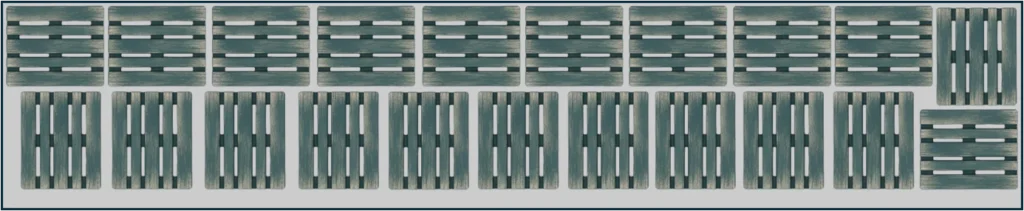
20’ standard sea container (Dry Van)
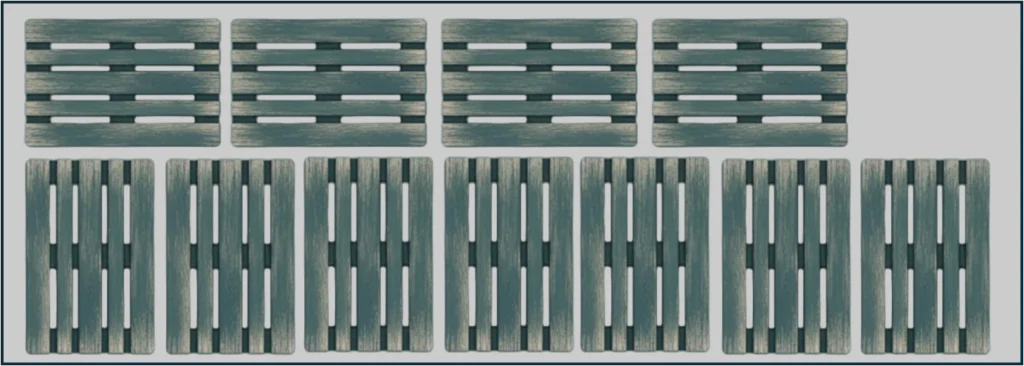
In a single layer, 11 Euro pallets measuring 800 × 1200 mm can be loaded (provided the cargo does not overhang the pallet footprint).
Alternatively, 9–10 industrial pallets measuring 1000 × 1200 mm can be loaded (provided the cargo does not overhang the pallet footprint).
40’ standard sea container (Dry Van)
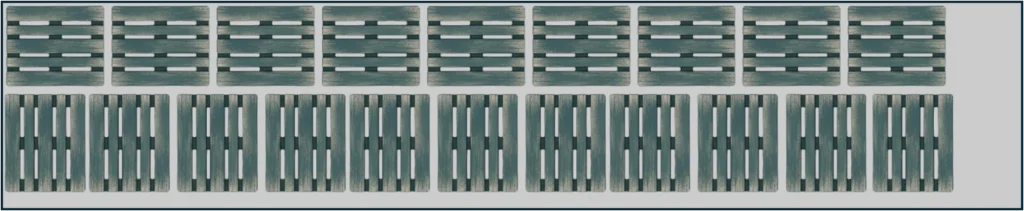
- In a single layer, 24–25 Euro pallets measuring 800 × 1200 mm can be loaded (without exceeding the pallet footprint).
For industrial pallets measuring 1000 × 1200 mm, the loading capacity is 20–21 units in a single layer.
40’ Pallet Wide Sea Container (Extended Width)
Primarily available for routes to: Spain, Portugal, the United Kingdom, and Ireland.
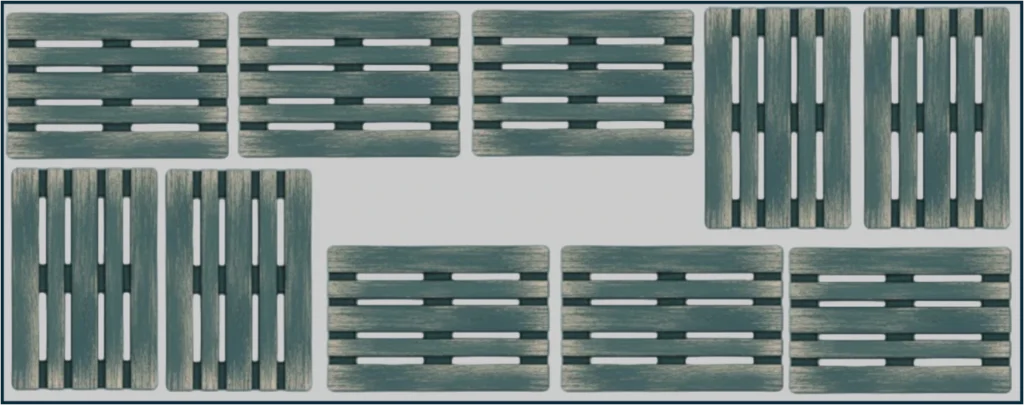
- In a single layer, 30 Euro pallets measuring 800 × 1200 mm can be loaded (cargo must not overhang the pallet).
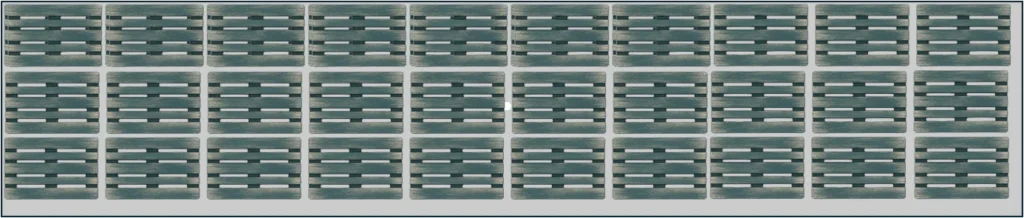
45’ Pallet Wide Sea Container (Extended Width)
Primarily available for routes to: Spain, Portugal, the United Kingdom, and Ireland.
- In a single layer, 33 Euro pallets measuring 800 × 1200 mm can be loaded (pallet footprint must be maintained).
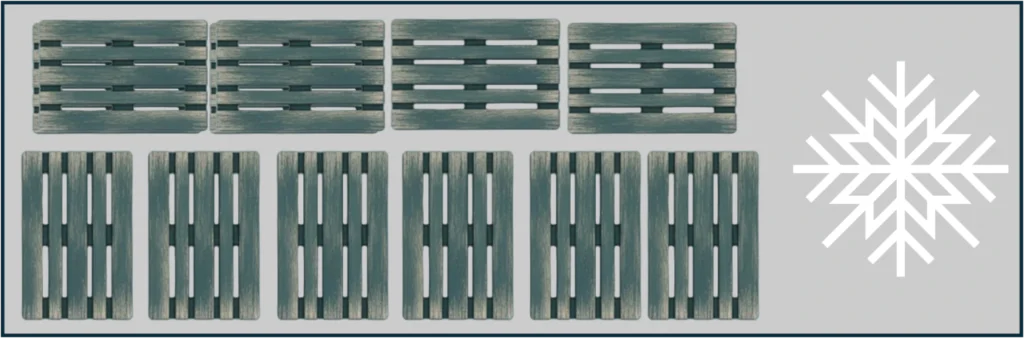
20’ Reefer Container (Refrigerated)
To ensure proper operation of the refrigeration unit and adequate air circulation, cargo must not exceed the red line marked inside the container.
A minimum clearance of 12 cm between the top of the cargo and the container roof must be maintained.
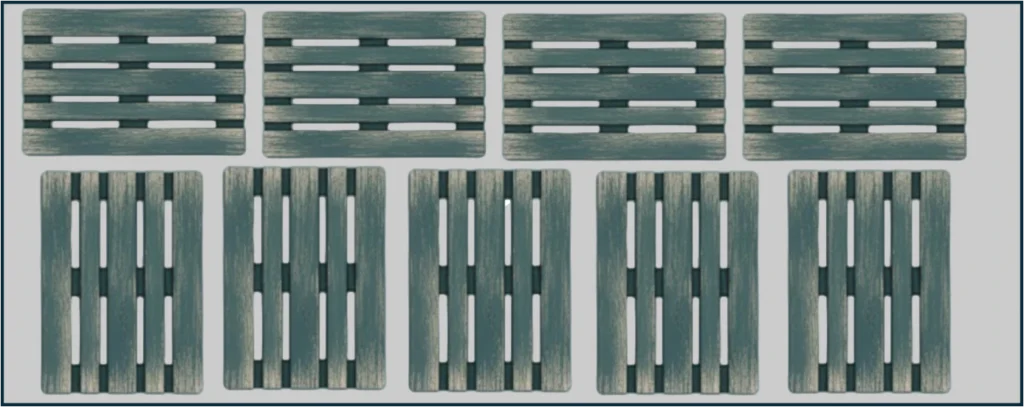
- In a single layer, 10 Euro pallets measuring 800 × 1200 mm can be loaded (cargo within the pallet footprint).
- Alternatively: 9 industrial pallets measuring 1000 × 1200 mm.
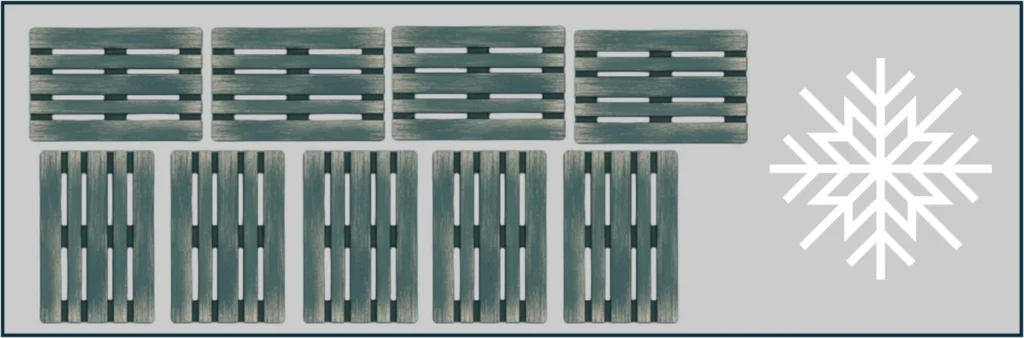
40’ Reefer and 40’ Reefer High Cube Containers
As with the 20’ Reefer container, cargo must not exceed the red line inside the container, and a minimum clearance of 12 cm below the ceiling must be maintained to ensure proper operation of the refrigeration unit and air circulation.
- In a single layer, 23 Euro pallets measuring 800 × 1200 mm can be loaded.
- For industrial pallets measuring 1000 × 1200 mm – 20 units in a single layer.